Re-Skincare Set

Re-Skincare Set

A refillable skincare set that turns Sephora's own vanity into a long-term, sustainable ritual.

The Re-Skincare set is a concept collaboration with Sephora Collection.

I studied Sephora's identity, ecosystem, and customer base to build a production-ready proposal.

The Re-Skincare set is a concept collaboration with Sephora Collection.

I studied Sephora's existing visual identity, product ecosystem, and customer base to build a production-ready proposal.

This project explored a gap in the sustainable beauty space: refillable products that don't sacrifice the premium feel customers expect from a prestige retailer.

The Re-Skincare set is a concept collaboration with Sephora Collection.

I studied Sephora's existing visual identity, product ecosystem, and customer base to build a production-ready proposal.

This project explored a gap in the sustainable beauty space: refillable products that don't sacrifice the premium feel customers expect from a prestige retailer.

One that closes a gap in sustainable beauty: refillable products that look desirable.

Year

2026
2 months

Discipline

Brand strategy
Product design
3D modeling
Market research

Can sustainability also feel prestigious?

A refillable cosmetic product only lowers carbon emissions after 3-4 refill cycles. This means environmental impact depends on repeat use, not just the mechanism existing. Repeat use requires retention, which requires desirability.

But they default to the same look of a white plastic tub for the sake of ‘low cost’.

As for Sephora, in a store built on making affordable products feel premium, "sustainable" currently reads as a downgrade.

A refillable cosmetic product only lowers carbon emissions after 3-4 refill cycles. This means environmental impact depends on repeat use, not just the mechanism existing. Repeat use requires retention, which requires desirability.


But they default to the same look of a white plastic tub for the sake of ‘low cost’.


As for Sephora, in a store built on making affordable products feel premium, "sustainable" currently reads as a downgrade.

More than

More than

81%

81%

of consumers avoid
unsustainable cosmetic products

But also

But also

72%

72%

of consumers say
packaging plays a key role in purchasing

How can we connect this bridge?

How can we connect this bridge?

They're buying the experience

Sephora's wide range of customers narrows down to one thing in common: treating their vanity as a considered space.

That means sustainability has to look like something they'd want on display.

Sephora's wide range of customers narrows down to one thing in common: treating their vanity as a considered space.

That means sustainability has to look like something they'd want on display.

Brand Language

First things first, I analyzed and created a brand guideline for Sephora Collection.

The identity balances chic restraint with playful accents:

a clean primary typeface paired with a whimsical, calligraphic secondary,

selective pops of color,

and matte black as the dominant material language.

First things first, I analyzed and created a brand guideline for Sephora Collection.


The identity balances chic restraint with playful accents:


a clean primary typeface paired with a whimsical, calligraphic secondary,


selective pops of color,


and matte black as the dominant material language.

Reality of beauty products

Analyzing the market surfaced a pattern:


In beauty, price correlates far more with brand name than with the actual cost of goods. 


This meant that my design could move beyond the category's default glossy white plastic tubs toward materials that better reflect what the price point already implies.

Products individually sold
Products sold in sets

The manufacturing

There are three common refill mechanisms in the category: cartridge systems, snap-in pods, and click-lock security.

I sourced pricing for each through Alibaba and contacted manufacturers in China to get realistic wholesale FOB quotes.

There are three common refill mechanisms in the category: cartridge systems, snap-in pods, and click-lock security.

I sourced pricing for each through Alibaba and contacted manufacturers in China to get realistic wholesale FOB quotes.

That research solidified the choice of frosted glass.

Contrary to my initial assumption, the cost difference between glass and standard plastic tooling came out to only a few cents per unit at this volume.

That research solidified the choice of frosted glass.

Contrary to my initial assumption, the cost difference between glass and standard plastic tooling came out to only a few cents per unit at this volume.

Catching 3 birds in 1 stone.

Sustainability

Refillable PCR-plastic pods let the heavyweight glass body be reused indefinitely

Affordability

The price is set within the current Sephora Collection price range despite the material upgrade.

Desirability

Matte-black pump and frosted glass body give the set a vanity-worthy finish that reads premium, not recycled.
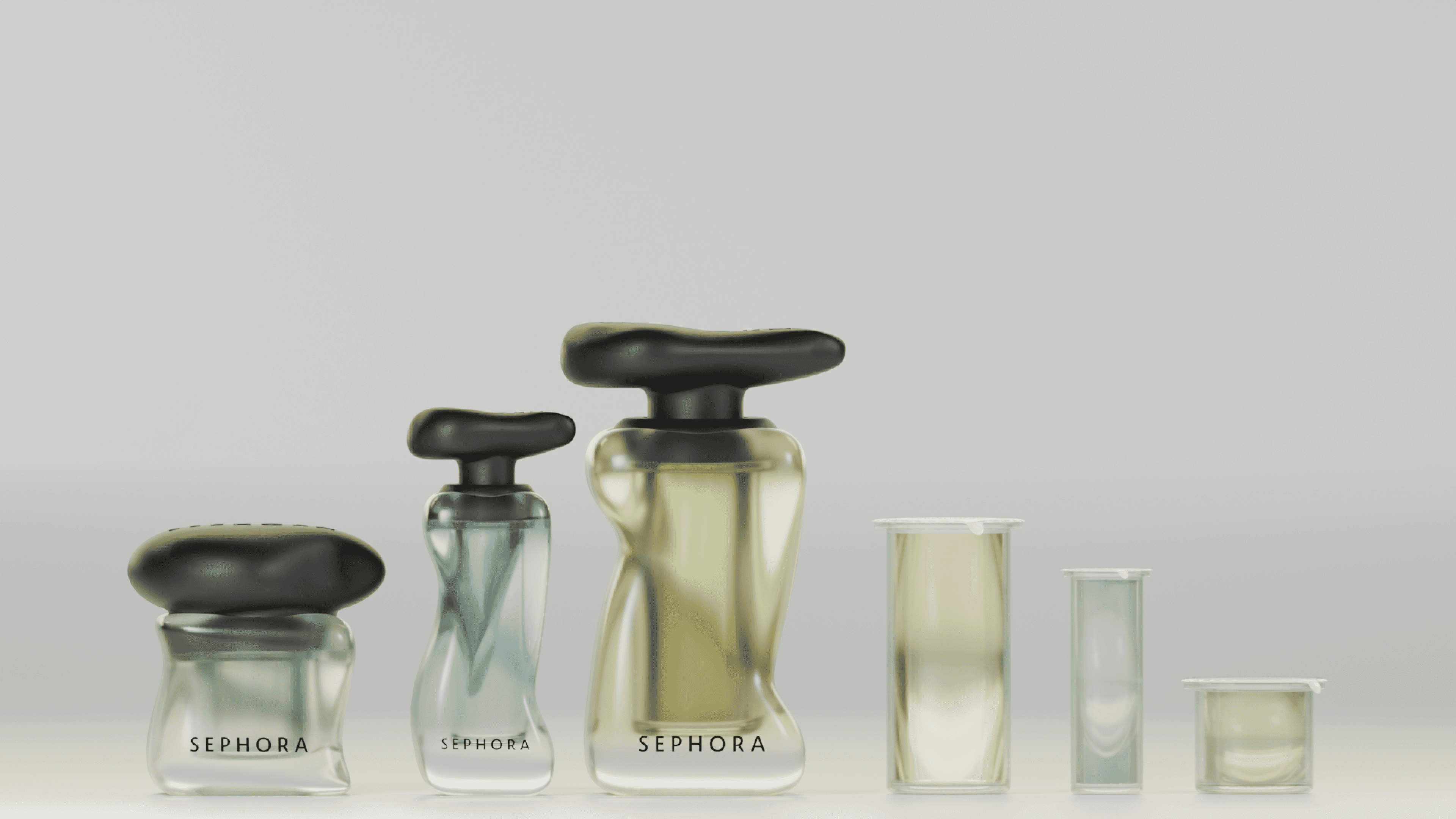
Re-Skincare Set.

Sephora's new refillable skincare set designed for a long-term, organized, and sustainable vanity experience.


Individual MSRP: $24-30

Set MSRP: $80

Comes in sets of 3: toner, moisturizer, and cream.

Refillable pods for a cheaper price.

Textured matte PP with wide, organic form.

Subtle branding

Entire form of the product follows the logo, S.

Packaging

Minimal paper packaging that shows size/volume for each category

12"x10"x4"

Placement

End-Cap under the "Clean at Sephora" banner. Eye-Level shelf placement.

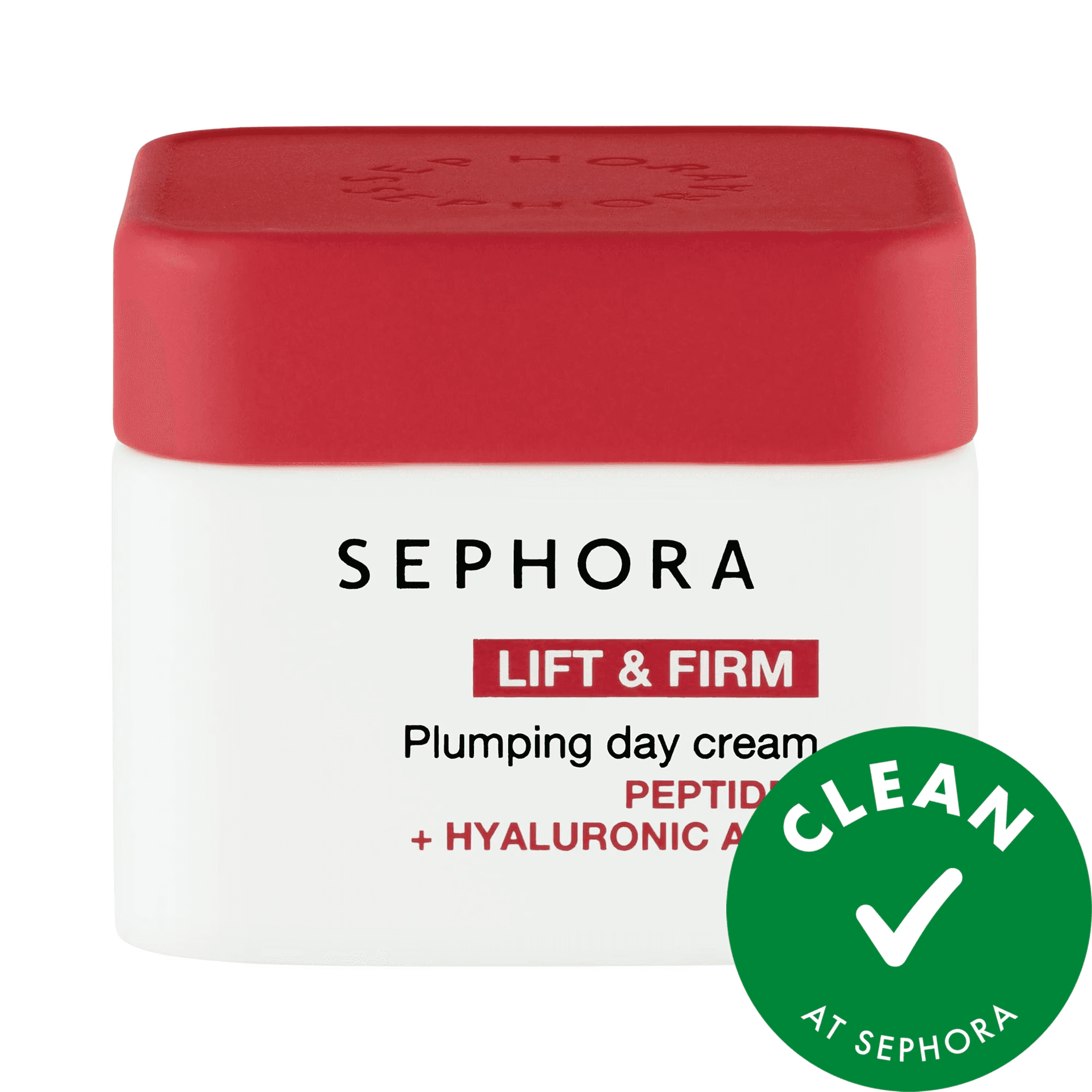
Clean at Sephora is a curated selection of brands that meet strict environmental criteria across ingredients, packaging, corporate commitments, and consumer transparency.

Why does this matter?

Why does this matter?

Why does this matter?

A design failure

95% of cosmetic packaging becomes waste after single use.

Electronics get repaired. Furniture gets reupholstered. But cosmetic products get thrown out and then replaced with identical ones.

95% of cosmetic packaging becomes waste after single use.

Electronics get repaired. Furniture gets reupholstered. But cosmetic products get thrown out and then replaced with identical ones.

From niche to normal

Refillable cosmetic products making up only 1-5% of the total beauty market is proof that sustainability can’t rely on altruism.

Customers buy what makes them feel good. By elevating refillable skincare into a high-tactility, premium object, we turn sustainability into an aesthetic upgrade.

Desirability is the first step toward changing the standard.

Refillable cosmetic products making up only 1-5% of the total beauty market is proof that sustainability can’t rely on altruism.

Customers buy what makes them feel good. By elevating refillable skincare into a high-tactility, premium object, we turn sustainability into an aesthetic upgrade.

Desirability is the first step toward changing the standard.

©2026 Made by ehyun! All rights reserved

©2026 Made by ehyun! All rights reserved

EhyunLLM